

Dry Dock, Blueprints, and Engine Repairs
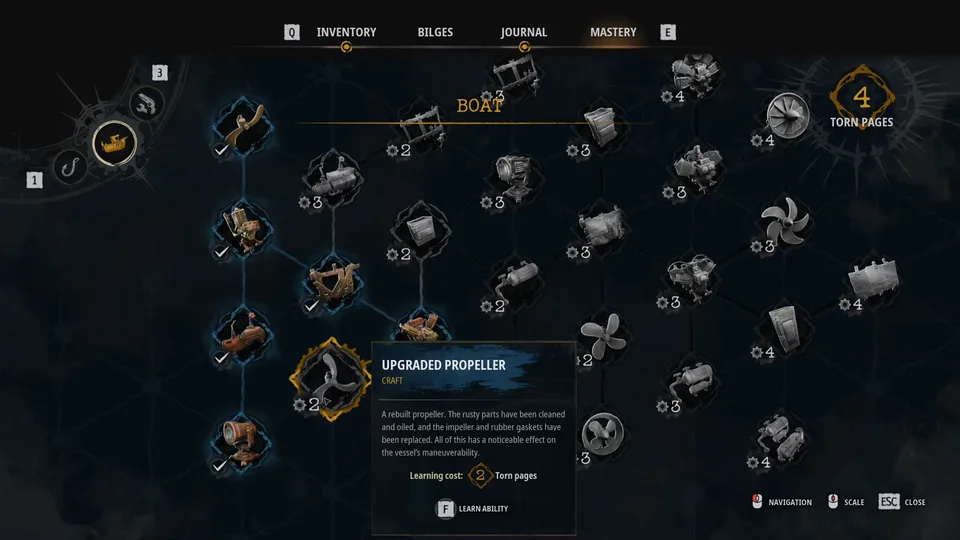
Boat modules are crafted at the Ship upgrades table in the Dry Dock. An upgraded engine will make your boat faster, while a new propeller will improve its maneuverability. As you explore the world, complete quests, and trade, you will gain Torn Pages. Torn page points are used as progression points. To open the Tech Tree, press [T]. The skill tree has several categories, each with its own development path. Every skill in the tree has a cost. If you have enough Torn Pages, select the skill and hold [F] to learn it.
Massive tentacles can damage the boat’s hull and engine. A damaged engine will severely reduce the boat’s speed. To repair the engine, step away from the helm by pressing [F]. Engine repairs require the necessary resources. If you have enough resources, play the mini-game and win to complete the repair.
Engines and Forward Speed
The  Standard Engine is an engine that is easy to repair and maintain, which makes it popular among anglers. It cannot boast either speed or reliability. The Standard Engine has a maximum forward speed of 600, a maximum backward speed of 200, and a repair cost of 3
 Metal Plate. Crafting 1 Standard Engine costs 4 Metal Plate and 2
 Gear.
Thanks to its rebuilt valve mechanism, the 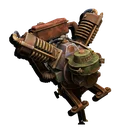 Upgraded Engine noticeably increases the boat’s speed and maneuverability. The Upgraded Engine has a maximum forward speed of 750, a maximum backward speed of 250, and a repair cost of 3 Metal Plate. Crafting 1 Upgraded Engine costs 10 Metal Plate, 4 Gear, 2
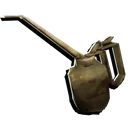 Machine oil, and 1
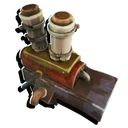 Carburetor.
The 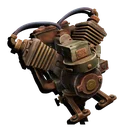 Heavy-Duty Engine uses new pistons and a massive crankshaft to increase the boat’s speed, and the engine performs well even in harsh aquatic conditions. The Heavy-Duty Engine has a maximum forward speed of 850, a maximum backward speed of 250, and a repair cost of 3 Metal Plate. A reworked cylinder head and a reinforced crankshaft give the
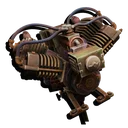 Reinforced Engine a serious edge in both speed and handling. The Reinforced Engine has a maximum forward speed of 950, a maximum backward speed of 280, and a repair cost of 4 Metal Plate.
Machined to tighter tolerances than any stock engine, the 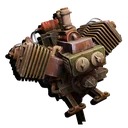 Precision Engine delivers smooth, reliable power with noticeably sharper handling. The Precision Engine has a maximum forward speed of 1,050, a maximum backward speed of 310, and a repair cost of 4 Metal Plate. The
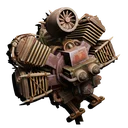 Prototype Engine is a one-of-a-kind engine built from salvaged pre-Collapse parts. The Prototype Engine has a maximum forward speed of 1,150, a maximum backward speed of 340, and a repair cost of 5 Metal Plate.
| Engine Module | Rarity | Forward Speed | Reverse Speed | Torn Pages | Repair Cost | Crafting Materials |
|---|---|---|---|---|---|---|
| Standard Engine |
Common | 600 | 200 | 0 | 3 Metal Plate |
4 Metal Plate, 2 Gear |
| Upgraded Engine |
Rare | 750 | 250 | 2 | 3 Metal Plate |
10 Metal Plate, 4 Gear, 2 Machine oil, 1 Carburetor |
| Heavy-Duty Engine |
Rare | 850 | 250 | 2 | 3 Metal Plate |
14 Metal Plate, 6 Gear, 2 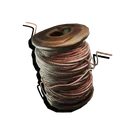 Thermo Coil, 3 Machine oil, 2 Carburetor |
| Reinforced Engine |
Unique | 950 | 280 | 3 | 4 Metal Plate |
16 Metal Plate, 6 Gear, 2 Carburetor, 3 Machine oil, 3 Thermo Coil, 1 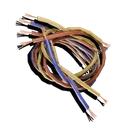 Cable |
| Precision Engine |
Unique | 1,050 | 310 | 3 | 4 Metal Plate |
20 Metal Plate, 7 Gear, 3 Carburetor, 4 Machine oil, 4 Thermo Coil, 2 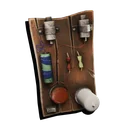 Relay tubes, 4 Cable |
| Prototype Engine |
Legend | 1,150 | 340 | 4 | 5 Metal Plate |
24 Metal Plate, 8 Gear, 3 Carburetor, 5 Machine oil, 5 Thermo Coil, 3 Relay tubes, 1  Glowbug |
Propellers, Handling, and Afterburners
The 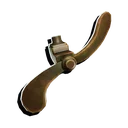 Old Propeller is a rusty, chipped propeller whose main advantage is that it simply exists. Don’t expect any maneuverability, as its angular turning speed is 0. Crafting 1 Old Propeller costs 3 Metal Plate and 1
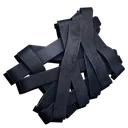 Rubber.
The 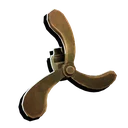 Upgraded Propeller is a rebuilt propeller where the rusty parts have been cleaned and oiled, and the impeller and rubber gaskets have been replaced. All of this has a noticeable effect on the vessel’s maneuverability, raising angular turning speed to 15. Crafting 1 Upgraded Propeller costs 4 Metal Plate, 1 Gear, 2 Rubber, and 1
 Chromatic Scales.
The  Balanced Propeller uses hand-balanced blades and a fresh bearing to take the wobble out of the shaft so the boat answers the helm quicker and holds its turn, providing an angular turning speed of 20. The
 Duralumin Propeller uses light duralumin blades that cut through the murk with far less drag so tight turns in narrow channels stop being a gamble, reaching an angular turning speed of 25. Built around a propeller shaft salvaged from a deep-water vessel, the
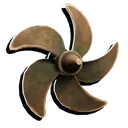 Deep-Water Propeller is steady, precise, and hard to foul even in thick weeds, reaching an angular turning speed of 30. The
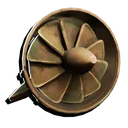 Prototype Propeller has a pre-Collapse blade profile reproduced by hand so the boat turns almost on the spot and obeys the slightest touch of the wheel, reaching an angular turning speed of 35.
An 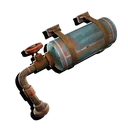 Afterburner is a system that forces fuel into the engine and provides a brief burst of power, which helps you escape danger. On the
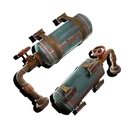 Advanced Afterburner, the pneumatic system builds up pressure during normal cruising, and when the air is released, it increases power and extends the duration of the burst. The
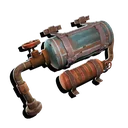 Injector Afterburner is a motorcycle carburetor turned into a boost injector that floods the engine with fuel on demand and delivers a much harder push. The
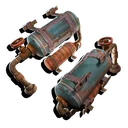 Prototype Afterburner pairs twin gas cylinders and a controlled injector for a violent burst of speed that can outrun almost anything in these waters.
| Propeller / Boost Module | Rarity | Turning Speed | Torn Pages | Crafting Materials |
|---|---|---|---|---|
| Old Propeller |
Common | 0 | 0 | 3 Metal Plate, 1 Rubber |
| Upgraded Propeller |
Rare | 15 | 2 | 4 Metal Plate, 1 Gear, 2 Rubber, 1 Chromatic Scales |
| Balanced Propeller |
Rare | 20 | 2 | 6 Metal Plate, 2 Gear, 3 Rubber, 2 Chromatic Scales |
| Duralumin Propeller |
Unique | 25 | 3 | 8 Metal Plate, 1  Impeller, 2 Gear, 3 Rubber, 2  Jaws |
| Deep-Water Propeller |
Unique | 30 | 3 | 10 Metal Plate, 2 Impeller, 3 Gear, 3 Rubber, 4 Jaws, 2  Bone Plate |
| Prototype Propeller |
Legend | 35 | 4 | 14 Metal Plate, 3 Impeller, 4 Gear, 4 Rubber, 1  Coral Tail, 4 Bone Plate |
| Afterburner |
Rare | — | 2 | 4 Metal Plate, 2 Bug slime, 6  Coral fibers, 2 Rubber |
| Advanced Afterburner |
Rare | — | 2 | 6 Metal Plate, 3  Alcohol, 3 Rubber, 5 Bug slime |
| Injector Afterburner |
Unique | — | 3 | 1 Gas Cylinder, 4 Alcohol, 4  Gunpowder, 3 Rubber |
| Prototype Afterburner |
Legend | — | 4 | 2 Gas Cylinder, 5 Alcohol, 6 Gunpowder, 4 Rubber, 2 Relay tubes, 3  Swamp Lily |
Hull Armor, Fuel Tanks, Fish Holds, and Spotlights
 Hull Protection is a makeshift-reinforced hull that increases the boat’s durability and provides additional protection for you. Crafting 1 Hull Protection module costs 3 Coral fibers, 2 Bug slime, 2
 Rope, and 2 Rubber.
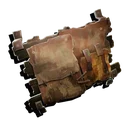 Plated Hull Protection uses metal plates bolted over the hull and sealed with chitin, which absorbs heavy blows at the cost of some speed. The
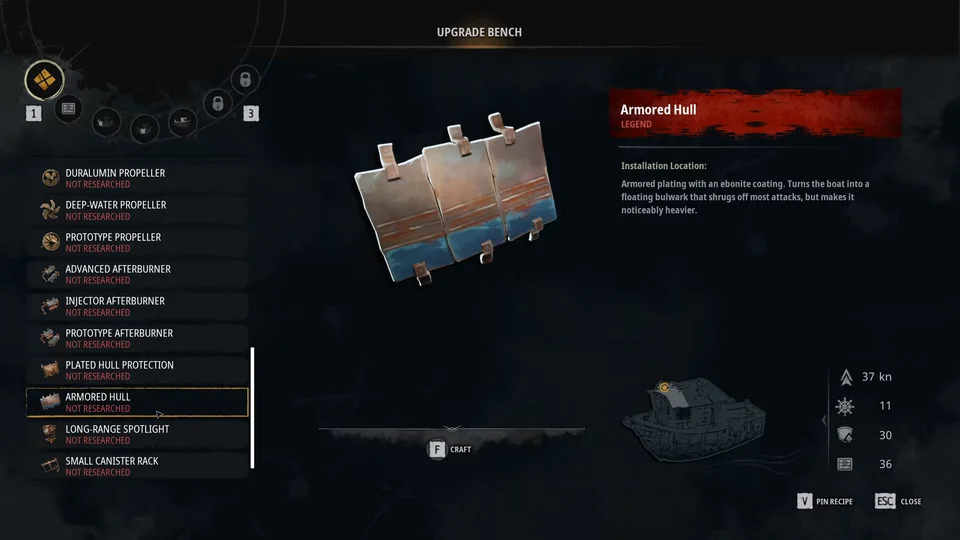
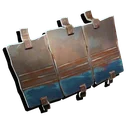 Armored Hull uses armored plating with an ebonite coating that turns the boat into a floating bulwark that shrugs off most attacks, but makes it noticeably heavier.
A standard sheet-metal 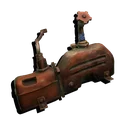 Fuel Tank is spacious enough to keep you from stalling halfway between islands, but nothing more, providing a maximum fuel capacity of 360. The
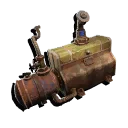 Riveted Fuel Tank is a heavier riveted tank with a reserve drum bolted on that holds a maximum fuel capacity of 720, enough fuel to reach the far islands and still find your way back. A
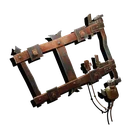 Small Canister Rack is a short welded rack for a single fuel canister, where one spare canister on board can be the difference between reaching the dock and drifting till dawn. The
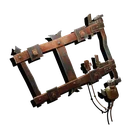 Dual Canister Rack is an expanded rack that holds two fuel canisters.
The 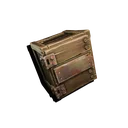 Small fish hold is a small container that increases the capacity of the hold. The
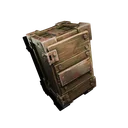 Medium fish hold is a standard fish hold that helps separate predatory and non-predatory fish into separate compartments and keeps them fresh longer during transport. The
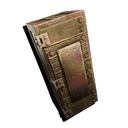 Large fish hold is a large, heavy hold for extended fishing expeditions. A
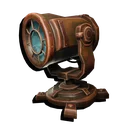 Spotlight is a light source that you carry with you into the darkest corners of the flooded world, while the
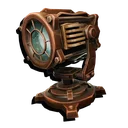 Long-Range Spotlight is a rebuilt searchlight with a silvered reflector and a stronger lamp whose beam reaches far into the dark and holds steady.